A few weeks after we arrived back home for good last year, my phone rang and daughter Kate’s number flashed up. When I answered, a small voice piped up “Hi Nanna! It’s me, Liam, and I’m calling to invite you to my birthday party.” How could I refuse such an adorable invitation??!! In early December I flew to Darwin and shared in the birthday celebrations of aforementioned cute five year old grandson. Of course, his equally handsome older brother Josh wasn’t about to be outdone. “Nanna,” he asked, “Will you come up again for my birthday?” That sounded like a fair deal to me and it was still five months away so another visit to the Top End would no doubt be in order by then.
What I didn’t reckon on when I made my promise to Josh, was that by the time his birthday rolled around the family had transplanted themselves from their already-distant base in Darwin, to a decidedly more remote home in Nhulunbuy in East Arnhem Land! In May this year I flew up to Cairns in northern Queensland, then connected through to Nhulunbuy on a smaller aircraft. My fellow passengers were a mixed bunch: FIFO (Fly In Fly Out) workers heading back to their remote workplace; Nhulunbuy residents returning from a visit to the “big smoke” for recreation, shopping, medical appointments and other necessities; and a handful of tourists and visitors like me, keen to see this wild and beautiful part of our country.

Pontoon Jetty at Nhulunbuy – turquoise waters, even under a grey and threatening sky
Son-in-law Paul is a police officer and he and Kate seized the opportunity for adventure when they took a voluntary two year posting to Nhulunbuy. Renowned for its fishing, four-wheel driving and outdoor lifestyle it’s a world away from the world but with most of the conveniences of home. The MOTH suggested it was their “Pohnpei moment” – a reference to our own exploit twelve years ago when we swapped our secure (and dull) public sector jobs and our suburban existence in Perth, for an Australian Volunteers International gig, living two years on a tiny island in the middle of the Pacific Ocean. And when I visited Nhulunbuy, I must confess the parallels between the two are striking.
Located on the Gove Peninsula Nhulunbuy is a small, far-flung township, created in the late 1960s when a bauxite mine and deep water port were established close by. Soon after, an alumina refinery was built and during the 1970s the population swelled to more than 3,500 – a level maintained until 2013. At that time, refinery operators Rio Tinto announced its closure; in mid 2014 the shutdown took place with the loss of more than a thousand jobs, substantially reducing the population. Rio Tinto promised a number of measures to assist the town and the displaced workers, including subsidising the financial obligations of both business and private sector interests, who in many instances had invested heavily in building a life around the thriving town population. At the time of my visit, these measures were still in place and it looked like business as usual to my untrained eye. It will be interesting to see “where to from here” when the three year support period expires in 2017. There are plans afoot to nurture the tourism potential of the area, in an effort to preserve current population levels and facilities.
I was impressed with the standard of living for most of the folks in this faraway place: a decent sized hospital with excellent Emergency Department, general, surgical and maternity wards, and an operating theatre capable of handling a wide variety of procedures. There are two primary schools and a high school, a respectable sized shopping centre with a Woolworths supermarket, butcher, post office, chemist, pizza shop, fabric shop and more. Another, smaller shopping centre has a large department/hardware store as well as a café serving tasty meals, snacks and coffees. There are a couple of pubs (permits required to buy alcohol – it’s an indigenous community), a service station, a couple of motels, and a couple of reasonable restaurants. Sport is all-pervasive and there’s an Olympic sized pool, a football oval, tennis courts and more. For Kate, Paul, Josh and Liam it’s paradise found! They revel in the outdoor lifestyle and whenever we chat on the phone they’re always about to embark on, or have just come back from, another wonderful escapade.
The Yolngu people are the traditional owners of the land (and freehold owners too, I understand), and the entire community is under the control of the indigenous Nhulunbuy Corporation. A permit is required to drive anywhere in the area and to reach some of the more remote and pristine places, additional permits are needed. I was lucky enough that such a trip, to the breath-takingly beautiful Cape Arnhem, was a highlight of my stay. Accessible only in the dry season and definitely only by serious four wheel drive vehicles, the trip takes around one and a half to two hours each way from town. Only a dozen vehicles are permitted to be in the area at any one time; this helps protect the environment but we also observed that you wouldn’t want to be meeting too much traffic coming the other way! The first part of the trip is on primitive and increasingly rugged unsealed roads, startlingly red in colour; narrow vehicle tracks wind through sparse Top End scrub, dotted with small mountains of dung to remind you that around any corner you could come face to face with a ‘buff’ – one of the enormous wild buffalo that populate the area and which are often possessed of an unsympathetic attitude.
More than an hour into the trip our three-strong convoy stopped to deflate the vehicle tyres to low pressure. We were about to switch from gravel tracks to sandy tracts and the softer tyres can spread out and give better traction on sand. I was relieved to learn that compressors were on board to reinflate the tyres on the way back! Both Kate and Paul are keen four wheel drivers, and Paul has notched up many hours of experience. But for this trip Kate was taking the opportunity to build her own skills, with Paul on board for moral and technical support. Now I’m the first to admit I may exhibit the tendencies of a biased parent; but I also freely confess to being a nervous passenger at the best of times, let alone off road. Kate’s driving was superb! Not only did I relax and enjoy the experience, I was incredibly proud of her prowess ❤
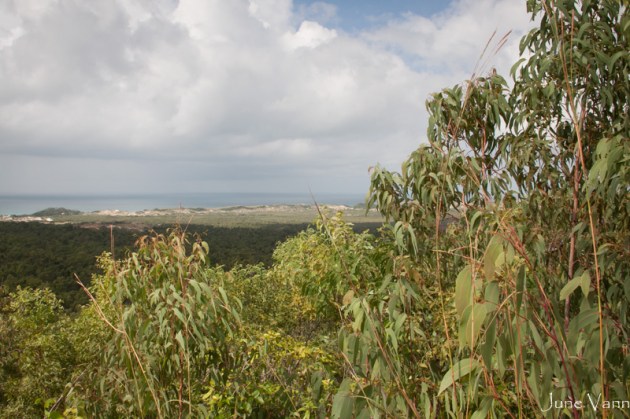
Photo stop on our way to The Penthouse
Our experienced lead driver navigated us through a veritable rabbit-warren of tracks, confidently guiding us the right way. A photo stop half way revealed a magnificent vista from the top end of Australia, looking towards the meeting point of the Arafura Sea and the Gulf of Capricornia. We drove along a 2 kilometre stretch of glorious white sandy beach, with turquoise waters spilling in at the edge.

Is there anyone else out there??!! The beach highway at Cape Arnhem

A “thong-mobile” – collection of flotsam and jetsam, created by visitors before us
Our final destination was The Penthouse – a natural clearing atop a cliff, that provides almost limitless views in either direction along the coastline. After an eagerly anticipated picnic lunch everyone slid down the track to the beach and frolicked in the temperate shallows. Everyone but me, that is!! The warm, tropical waters right around the northern coastline of Australia are infested with saltwater crocs, some of which can grow to 6 metres in length. Despite cries of “The water is so clear, you can see what’s in there,” I remained firmly on terra firma and passed more than a little time worrying about my genetic output down there in peril. One of the standing jokes in this part of the world is that you needn’t worry about sharks in the sea, as the crocodiles have eaten them all …
My brief week in Nhulunbuy zoomed by, as we set a cracking pace to cram as much as we could into the family get together. Josh’s birthday party, ostensibly the reason for my trip, passed in a haze of tropical heat, cake, fun games for the kids and a few drinks for the grown-ups. Kate took me out to Yirrkala, a community some 18 kilometres away, world-renowned for its indigenous artists. We visited the Yirrkala Art Centre where we wandered through spectacular exhibitions of art that is sold around the globe, then sat awhile to watch two artists at work – sitting or half-lying on the floor and meticulously producing the distinctive dot paintings that tell stories from the Dreamtime.


We walked with the dogs along deserted sandy beaches, feeling like we might be the only people on earth. The island and beach at East Woody Point, and the shoreline at Rainbow Cliff were a veritable treasure trove of photo opportunities. We marvelled at the now silent, red behemoth of the moth-balled alumina refinery that once roared with life as it processed millions of tonnes of bauxite, mined annually from nearby. We watched the kids play soccer in the relative “cool” of the evening (temperatures in May can “plummet” to the low twenties Celsius), had our eyebrows waxed in a makeshift tropical carport-with-curtains beauty salon, drank decent coffee at the Three C’s Café under the lazy whir of overhead fans on a steamy afternoon.
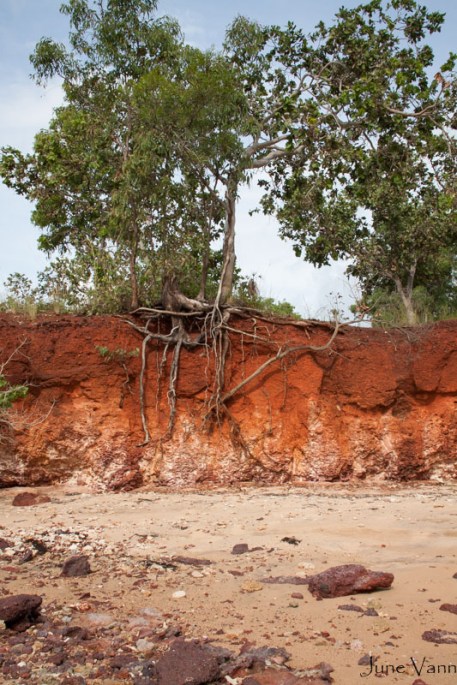
Wow! (At Rainbow Cliff)

Striking colours on Rainbow Cliff shoreline
The isolation of this thriving community is what struck me most as being comparable with Pohnpei: some 650 kilometres from Darwin, as the crow flies, Nhulunbuy is nonetheless a road trip of about one thousand kilometres! During the wet season (roughly November to April) the roads are often cut, turning Nhulunbuy into its own version of a tropical island. Supplies are ferried in by barge – an exercise in both cost-efficiency and practicality, since the barges can usually run all year round (tropical cyclones notwithstanding!) and carry more than a truck possibly could. The supermarket receives new stock once a week and visiting the shops at various stages of the weekly cycle reminded me of the ups and downs of consumable supplies during our own island years. Two distinct advantages of Nhulunbuy over Pohnpei include English being the main language, and having one’s own currency!!
When families live so far apart – commonplace on a continent the size of ours – the times together are all too few and far between. I’m grateful that the boys are now of an age that we have a real connection and can pick that up each time we meet … but it’s still always sad to say goodbye. Josh and Liam went a little late to school the morning I left, so they could take Nanna to the airport; I smiled as I recalled Liam, at the age of three, confidently telling a friend in Darwin that they were off to “Nanna’s Airport” – for him it seemed a natural connection of ownership. With hugs and a few tears and the perennial hope that the next visit wouldn’t be too far away, we parted company and I settled in to wait for my delayed flight. It was only after take-off, as I looked back over my shoulder through the plane window, that I noticed the unusually shaped building at Gove airport is actually an aircraft when you view it from the air. Brilliant!

Cool! Gove Airport from the air (picture from Google Earth)
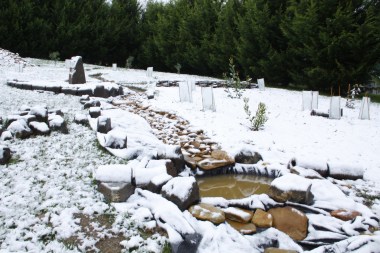
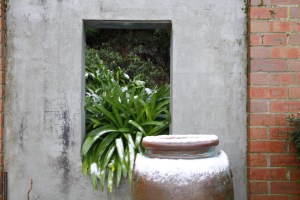 clothing, we ventured out with our cameras and smart phones as soon as the first grey light cut through the gloom. Excited as kids, we tramped through the modest covering and happily spent an hour marvelling at and photographing this great novelty. I did pause to reflect that our friends in North America and in Europe would have been highly amused by our excitement over such a minor snowfall! But hey, I wasn’t about to let anyone snow on my parade that day 😉
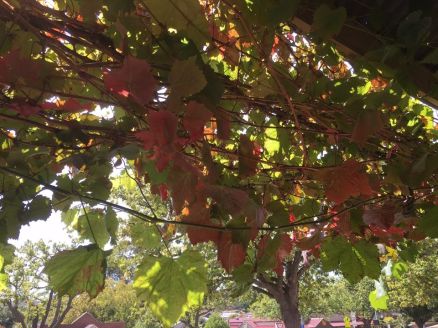


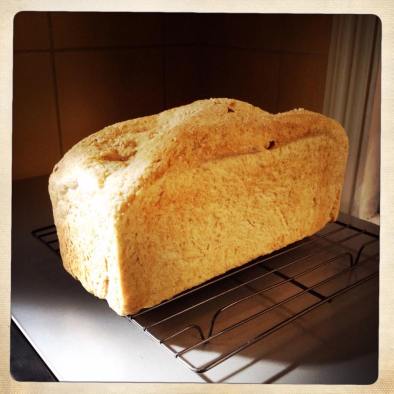
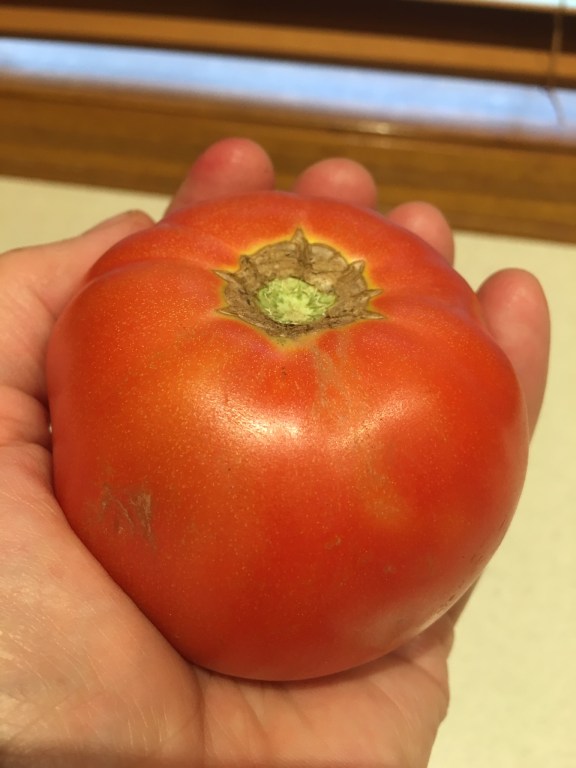


 chopped and tossed into stews, casseroles and pasta sauces. A garden fresh tomato soup fittingly graced the lunch table on Valentine’s Day and was a hit. Light and delicate, fragrant like summer itself, it was quickly slurped up with warm slices of freshly baked wholemeal bread, decadently slathered with butter. There’s more in the freezer so we can recall the scent of warmer days when winter wraps its cool grip around us soon.
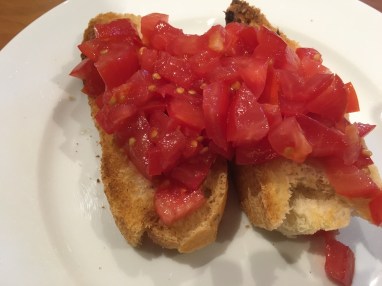 We’ve revelled in the sensuality of sweet, juicy tomatoes in salads, on sandwiches and savoured whole as snacks; the only way to enjoy bruschetta is when the tomatoes are as succulent as these are. Quickly sautéed, they brighten up a plateful of bacon and eggs for breakfast. Whether the French were right or not about the aphrodisiac effect, I’ve certainly had a long-standing love affair with this amazing fruit (or vegetable, depending on which theory you subscribe to).

 The laundry takes up an hour or so of my day a couple of times a week, perhaps a little more on the days we change the bed linen and towels. The MOTH tends to save up the ironing for a special treat every two or three weeks … so that it lasts for at least a couple of hours when he finally gets around to it. He hauls out all the the equipment (mysterious things like a rather spindly looking contraption he lays the clothes on; a hissing electrical gadget that spits steam and water and takes skin off the fingers of the unwary; a fold-away hanging frame which he rapidly fills with smartly pressed shirts and the like). It’s quite a production. He turns on some classical music, and the air conditioner if the ambient temperature is above 20 degrees Celsius. And then he works his way through the task at a speed that astounds and impresses me … and he smiles while he’s doing it. Which reminds me that in my thirties, my dislike of ironing caused me to say that I hated ironing and I hated babysitting other peoples’ children. But if I was offered a choice, I would take on a basket of crumpled clothes. That was before I knew the delights of grandchildren. Now it’s different ❤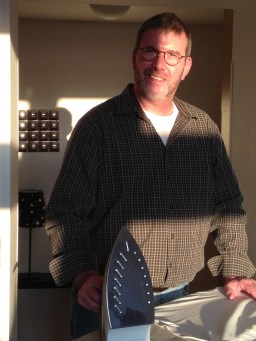
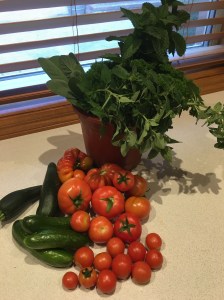


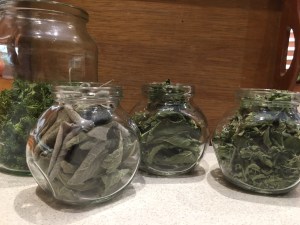 cheese board, dried mango, banana, apple and pear will make scrumptious snacks, cereal toppings and cake ingredients. Veritable seas of parsley, sage, mint and oregano sway in the veggie patch and these have also dried beautifully, creating a collection of jars filled with multi-hued green piquancy that will last long after the frost finishes off their living relatives.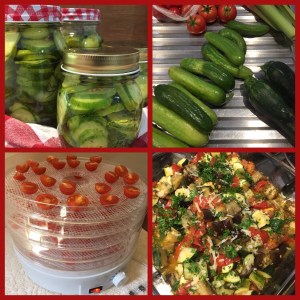
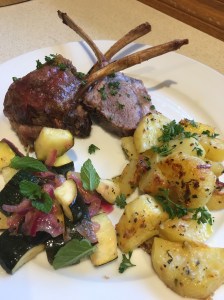 oil, sprinkle with salt and pepper and let it sit for a couple of hours. Then into a preheated oven around 200C for 45-60 minutes,” (depending on how “done” you like your lamb – 45-50 minutes is perfect for us, for a ten point rack). Crisp skin, tender and pink meat. Heaven!! Ably supported by some garlicky, herby, parmesan roasted potatoes and homegrown roasted zucchini with mint & lemon (all herbs grown right here at the Allan Street Flower and Veggie Collective, of course; lemons from my brother, aka Baby Bear). An altogether amazing meal and a wonderful showcase for seriously good produce.
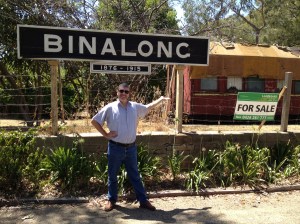 We set up an appointment to inspect the station and drove into Binalong on a hot, dusty February day. We checked in to the Royal Tara Motel (“Conference and Convention Centre” in slightly smaller letters), unpacked our bags and headed to the Railway Station for our first proper look at the place that had captured our imagination and prompted our impulsive departure from Manila. We were hoping for an unequivocal ‘wow’ moment as soon as we stepped inside the place and whilst we were slightly impressed, it wasn’t quite the must-buy experience we’d wished for. The house was a delight but there was still a lot of restoration and renovation to be done, despite evidence of much hard work by the current owners over the previous 17 years. And the village, where we would spend our retirement – potentially thirty years, the last stretch of our lives – wasn’t quite our cup of tea.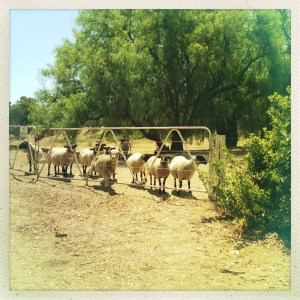
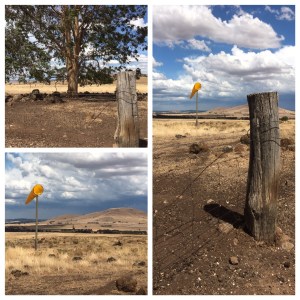
 Trundling along narrow, rain soaked roads we passed a sign pointing to Tuki Trout Farm and decided it was time for that long-promised visit. The farm is very much a working property; if we’d been in any doubt, the long drive from the gate of the property to the stable building that houses the restaurant would have convinced us. Grazing sheep, iconic windmills, remnant timber cattle ramps and yards – all offered irresistible photo opportunities. With blue skies and fluffy white clouds in one direction and magnificent, moody grey storm skies in another, it was a feast for the eye and the lens.
 Eating those trout was practically a religious experience – they were exquisite. Flavoursome, cooked to perfection and redolent with the beautiful spring water they were so recently swimming in. A squeeze of lemon and a trickle of creamy, home-made, crushed green peppercorn dressing made for a heavenly taste. This amazing fish needed nothing more than locally grown potatoes and a mixed salad to accompany it. Oh, except perhaps the scrumptious, locally baked bread. There was that!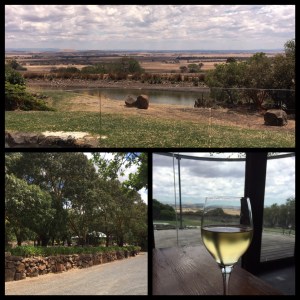
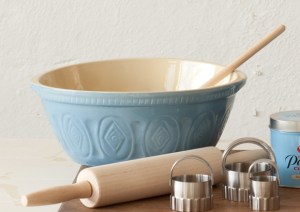 Depending on who’s home we were holding the celebrations at, I vividly remember both my Mum and her Mum, my Nanna, cooking up their delicious pies. This centre-piece of the new year’s feast was neither fragile nor compact, as the term “pie” might suggest, but was made in a huge, deep dish – it often fed a dozen or more hungry revellers so it had to be hearty. No place here for small-scale casserole dishes – our family pies filled an enormous ceramic mixing bowl with a scrumptious mix of beef, potato and seasonings, which was simmered slowly in the oven till everything was tender and rich. This was then capped with home-made shortcrust pastry and baked till the crust was flaky and golden brown. The marvellous aroma that filled the kitchen on new year’s eve was enough to make you a little crazy even before the party began. The accompaniments varied little: pickled red cabbage (served cold) or pickled beetroot, and a dollop of mushy peas. The pie was served just after midnight, when the new year had been properly seen in; a steaming hot meal was thought to be a fine omen for a year of plenty, “If you start the year with a good meal, you won’t go hungry,” my Nanna always told me.
 This Moveable Feast